
A Special Look Back At The First Florida Seminole Museum
We often talk about the Ah-Tah-Thi-Ki Museum on this blog, and the incredible history it houses. But, did you know that before it opened there was another Seminole museum? The first Seminole museum opened in Tampa in the 1980s and was the precursor to the Ah-Tah-Thi-Ki Museum we know today. This week, join us to look into the history of this first museum, and how it still is part of the Ah-Tah-Thi-Ki Museum of today.
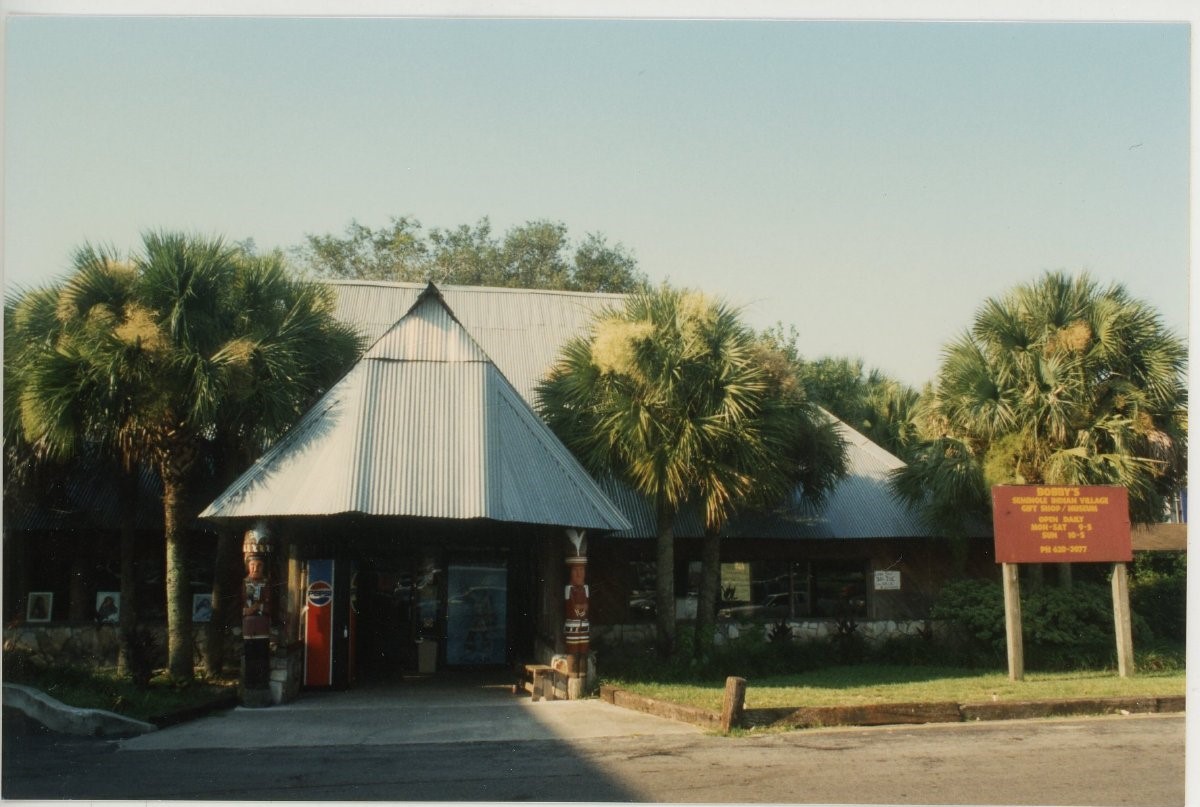
In our featured image, you can see the outside of Bobby’s Seminole Indian Village, Gift Shop, and Museum located in the Tampa Seminole Reservation in Tampa, Florida. Bobby Henry owned and operated the location prior to its demolition in the early 2000s. (2015.8.1594, ATTK Museum)
The Tampa Seminole Reservation
The Tampa Reservation is one of the “newer” Seminole Reservations, although Seminole people have lived in the Tampa Bay area forever. During the Seminole War period, U.S. Army forces pushed Seminole people inward and south, ousting them from their camps around Tampa Bay. Fort Brooke, which was located at the mouth of the Hillsborough River in Tampa Bay, was a United States military stronghold. It was also a location of intense pain and a bloody history for Seminoles, a stopping point on the forced relocation of Seminoles north.
“It was a concentration camp,” then-Chairman James Billie stated to the Miami Herald in 1982 about Fort Brooke. “It used to be a fearful word. From there you got in the streamer boat. You were herded off to Louisiana. From there they marched you to Oklahoma. To me, it’s like the holocaust.” (Miami Herald, July 11 1982) Thousands of Seminoles died on this journey.
In 1980, nine acres of land in Tampa were designated in trust for the Seminole Tribe of Florida to be used as a reservation. In a 2014 Seminole Tribune article, James Billie remarked on how far it had come since then, stating “I never dreamed I would see the day when it [Tampa] would look like this.” Those nine acres off Orient Road now house one of the Seminole Tribe of Florida’s biggest casinos: the Seminole Hard Rock Hotel and Casino Tampa. But, before the Tampa Hard Rock became a reality, it was home to another important piece of the Seminole story: The Coo Taun Cho Bee Museum.
The First Seminole Museum
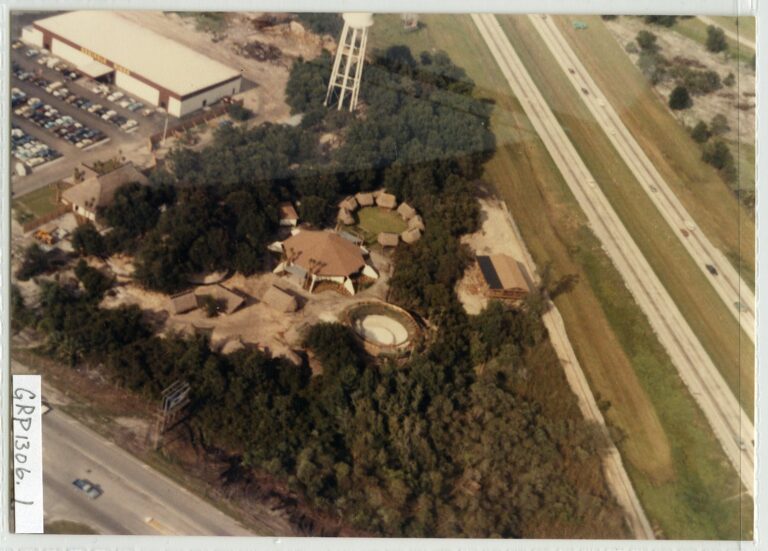
The Coo Taun Cho Bee Museum, which was located inside Bobby Henry’s Seminole Village, was the Seminole Tribe of Florida’s first museum. Below, you can see the eight-point Coo Taun Cho Bee Museum in the center of this aerial shot, surrounded by Bobby Henry’s Village (GRP1306.1, ATTK Museum). Modelled after a giant chickee, it was intended to be authentically Seminole in every way.
Building a museum here was an act of reclamation: coming home to Tampa, and to the land that had been there before. They even gave the Museum the old name for Fort Brooke: Coo Taun Cho Bee, or “Big Shore Line.” Names hold a lot of meaning, and what was Coo Taun Cho Bee had become Tampa and Fort Brooke. By building the Museum, and carving a place for the reservation, it could become Coo Taun Cho Bee again.
“Seminoles have suffered enough,” James Billie shared in a 1984 interview. “Now we want to tell our story. Everyone knows the story of Tampa. We want a museum to tell the story of Coo Taun Cho Bee.” (Fort Pierce Tribune, January 29, 1984)
The Coo Taun Cho Bee Museum and Bobby Henry’s Seminole Village
The Coo Taun Cho Bee Museum was the first Florida Seminole museum, but it was part of a longer trajectory of Seminoles working to tell their own stories. At Okalee Village just a few decades before, Seminoles had taken financial autonomy and built a business out of sharing their traditions. This first museum was the next step, melding some of those same demonstrations and traditions with the concept of presenting and caring for Seminole history as they lived it. The Museum featured weapons, artifacts, historic objects, jewelry and clothing. There were also a number of biographies of prominent Tribal Members, including some that you couldn’t find anywhere else.
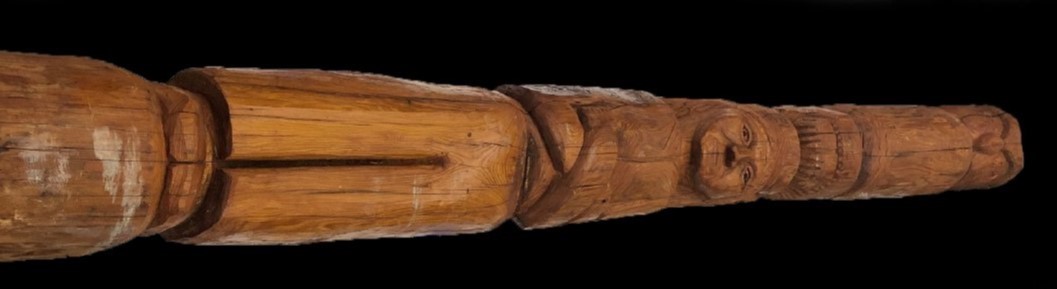
Bobby Henry, who managed and cared for the Museum and the Village, would also add to the Museum with his own wood carvings. A prolific wood carver, Henry has left behind some incredible pieces that were part of the Coo Taun Cho Bee Collection. They are now housed and cared for by the Ah-Tah-Thi-Ki Museum.
In addition to the Museum itself, Bobby Henry’s Seminole Village featured chickees, alligator wrestling, live snake demonstrations, and other traditional demonstrations. But, its heart was the Museum, sharing the heritage and history of the Seminole people with every visitor. In a vintage ad from 1984, you can see how important it was to share this history.
“Welcome to Coo Taun Cho Bee, or ‘Big Shore Line,’” it reads. “As it turns out, there is great wisdom in our name for this place. Because as you know, the big shore line attracts millions of visitors to the Tampa Bay area each year. But there was a time, not that long ago, when we lived here alone. Alone with the alligators, the palmetto spikes, the live oaks, the snakes and the pine needles. That world has become our heritage. And today, we welcome you to see it as we saw it over a century ago.” (The Tampa Tribune, November 4, 1984)
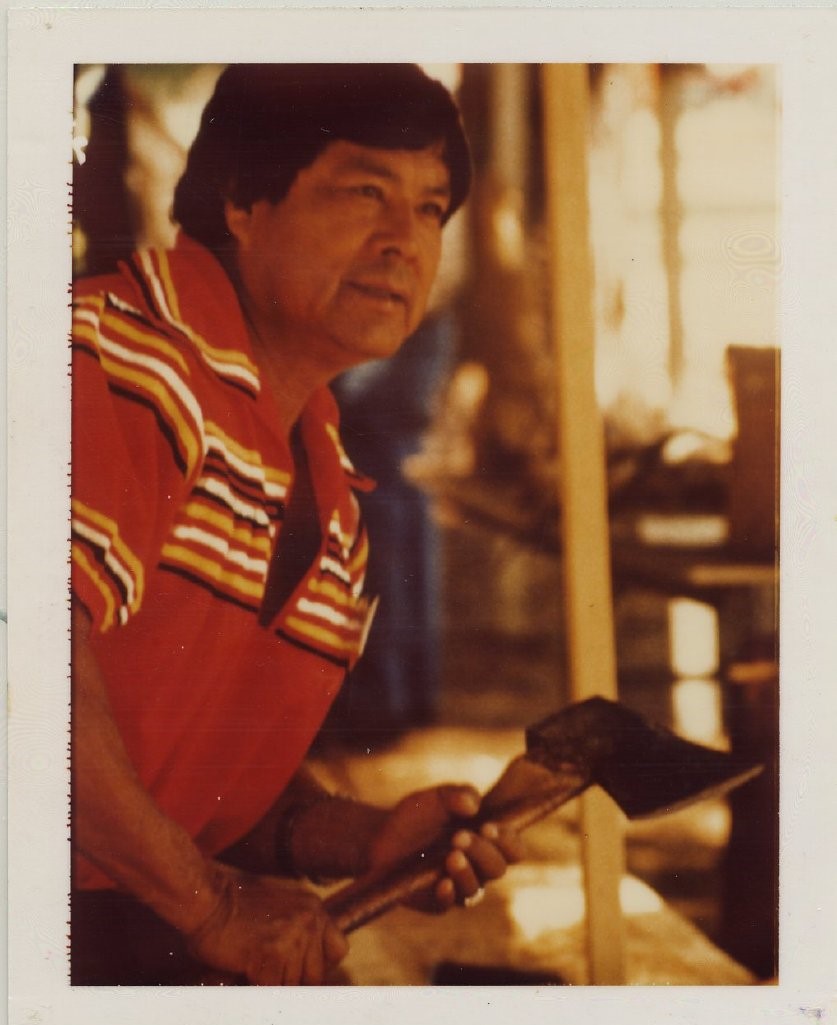
Bobby Henry (2015.6.13236, ATTK Museum)
Bobby Henry
You would be hard pressed to read anything about the Coo Taun Cho Bee Museum without also reading Bobby Henry’s name. A Tribal Medicine Man, Bobby Henry has left a lasting impact on the Seminole Tribe of Florida that will be felt for generations. He is a traditional wood and dugout canoe carver, chickee builder, dancer, and alligator wrestler who focuses on keeping the old traditions alive.
Born in 1937, Henry is part of the Otter Clan. A rainmaker, it was said he cured a drought in Tampa with his rain dance. “I didn’t know that what I knew could do that, but apparently I know more than I thought,” Henry would quip in an interview later. He said it took “an act of faith” to try the dance. He had never done it before. (Tampa Bay Times, July 4, 1993).
Henry was focused on passing down these traditions, like dugout canoe carving that he learned from his father. “My people need to know how to build canoes” he stated in 1988, sharing how his own father taught him. Bobby Henry would teach canoe carving to Danny Wilcox through the Florida Department of State’s Folk Arts Apprenticeship program in the late 1980s.
In a pinch, Henry would also wrestle alligators at his village in the 1980s. “I would rather leave it for the younger men. But sometimes we’re short and I’m needed. I would like to retire with all my fingers,” he would joke in 1988 (Tampa Bay Times, May 22, 1988).
Henry’s vision for keeping these traditions alive continued throughout his life. At the Lakeland Reservation groundbreaking, he shared his personal mission. The Lakeland Reservation became the home of many people who had previously lived in Tampa before the construction of the Seminole Hard Rock Hotel & Casino Tampa. “We’ve been waiting and waiting,” Bobby shared. “I feel real good about today. I need to keep talking to the young people, they don’t know enough about the culture, I just want to make people understand. As I get older, I feel like I want to go faster and do more things. I’m going to keep telling our people’s story.”
A Legacy
The Coo Taun Cho Bee Museum might be gone, but it has a lasting legacy in the history of the Seminole Tribe of Florida. The first Seminole museum would pave the way for the Ah-Tah-Thi-Ki Museum, opening the door for the Smithsonian Accredited institution we know today. The collection formerly found within its walls also remains, now held and cared for by the Ah-Tah-Thi-Ki Museum. Interested in learning more about the collection? Come back in two weeks for part two! We will explore some of this incredible collection, and its continued importance to the Seminole Tribe.
Below, enjoy some vintage images from the Coo Taun Cho Bee Museum and Bobby Henry’s Seminole village.
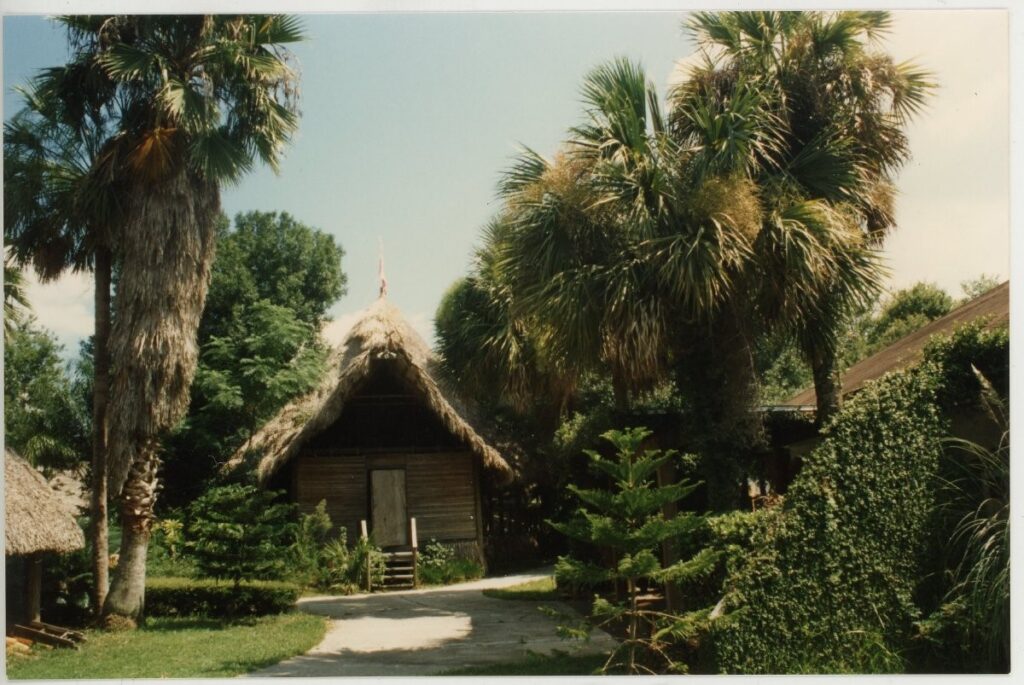
A chickee inside Bobby Henry’s Seminole Village in Tampa (2015.8.1600, ATTK Museum)
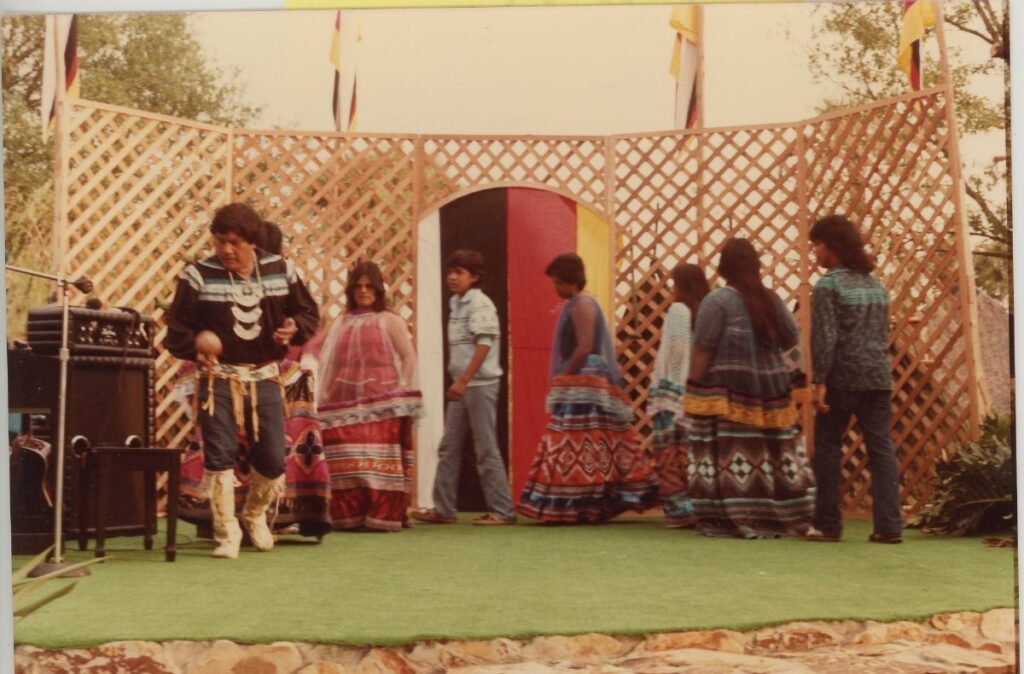
Bobby Henry and his stomp dancers, circa 1984, at his village. (2015.6.22543, ATTK Museum)
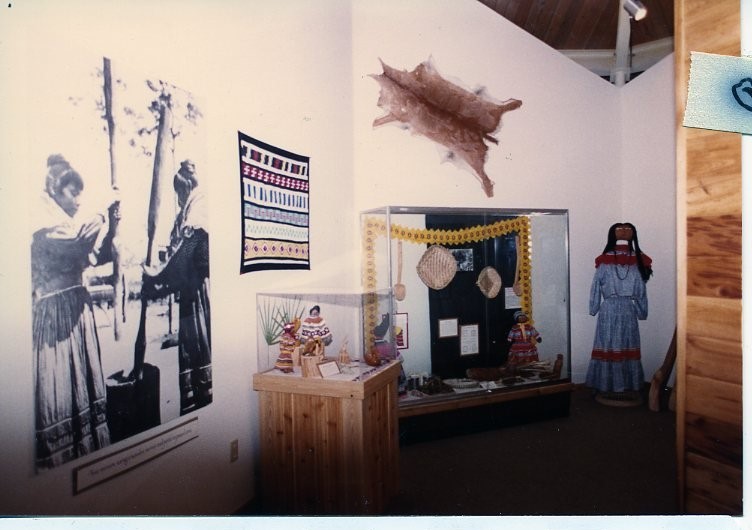
Part of Coo-Taun Cho-Bee gallery. Shows displays of baskets and dolls. Patchwork quilt and pelt on the wall. You might recognize the patchwork sampler on the wall from a previous post! (2002.166.225, ATTK Museum)

Outdoor wood sign. (2002.166.456, ATTK Museum)
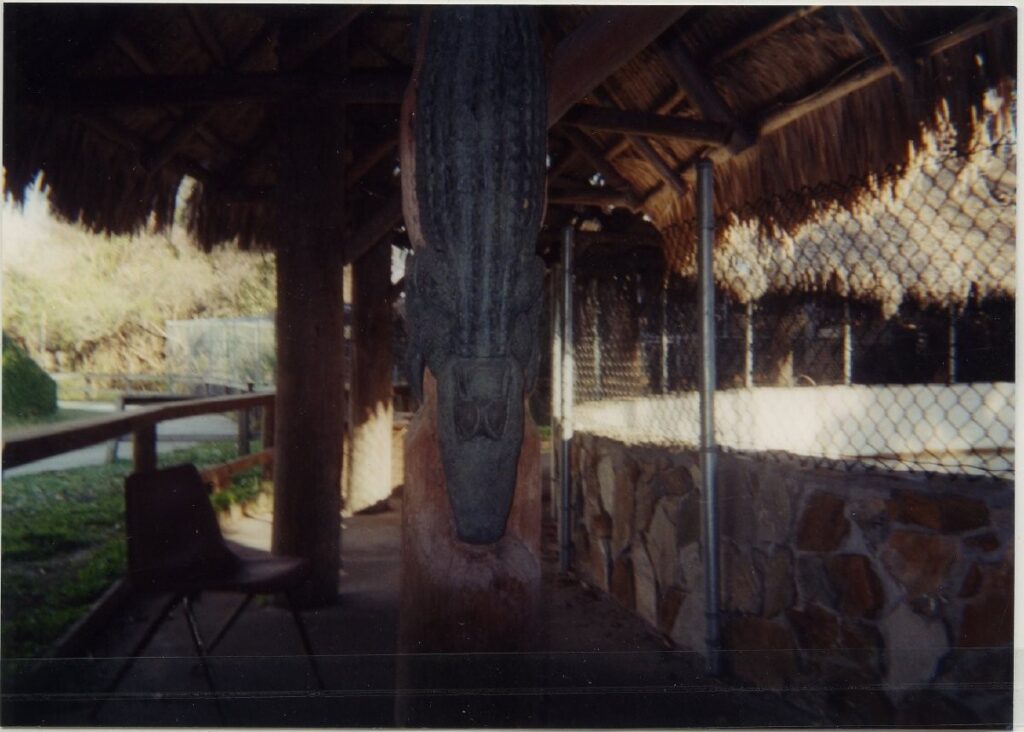
Carved alligator on a chickee pole, Bobby’s Seminole Village. (2002.166466, ATTK Museum)
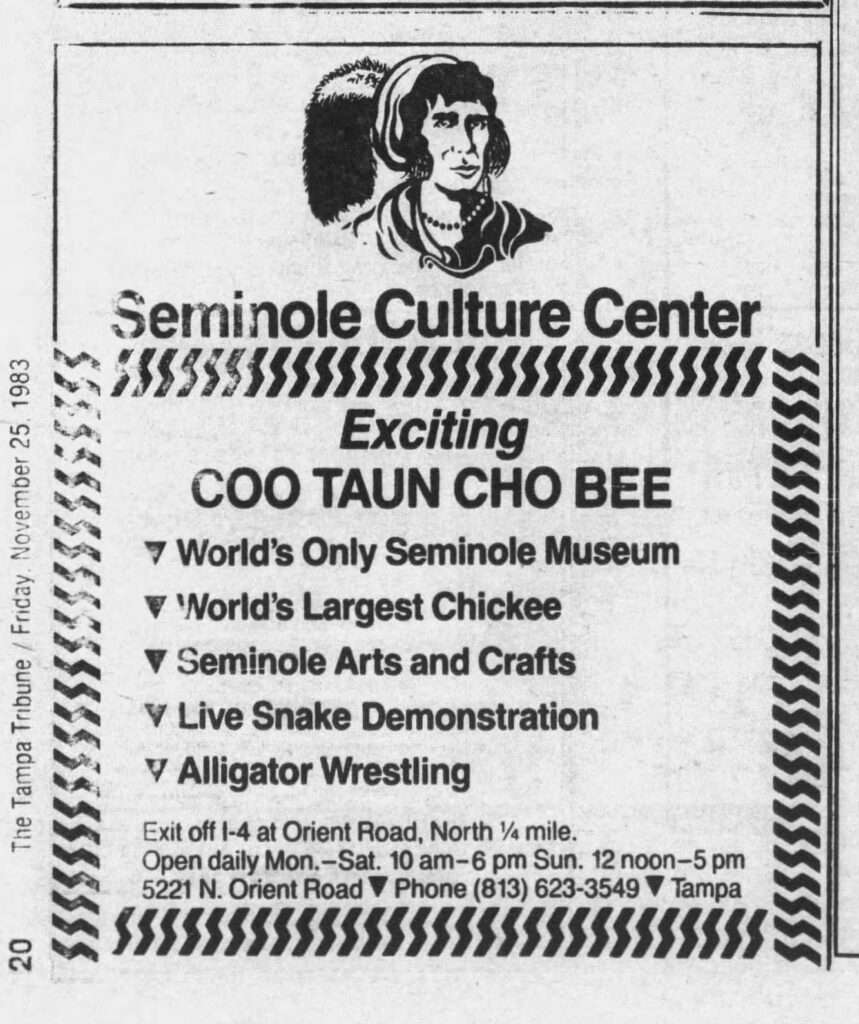
Vintage Ad. The Tampa Tribune, November 25, 1983