
Portraits and Peace Medals: Henry Inman’s Portrait of Micanopy
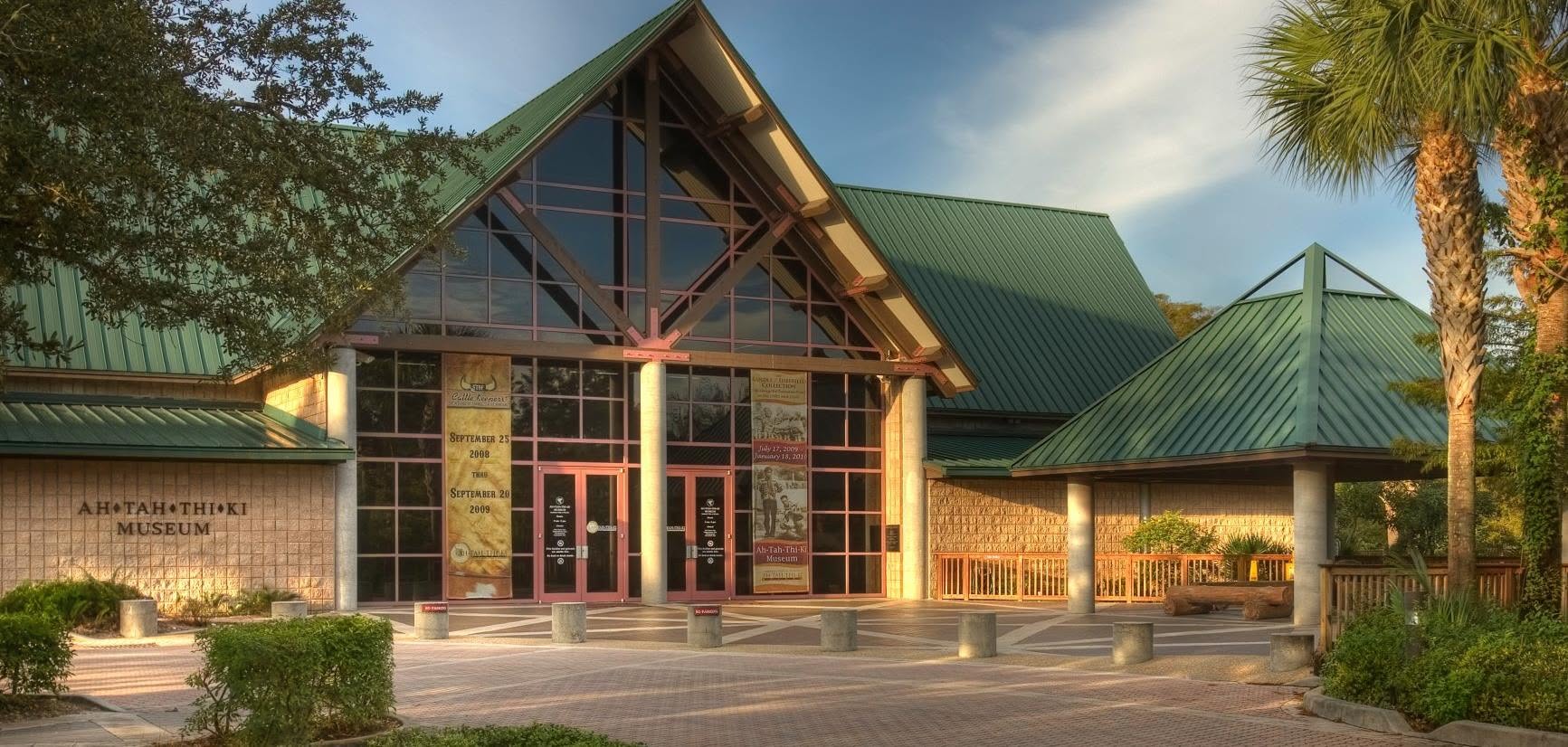
A lot of the 200,000-plus objects at the Ah-Tah-Thi-Ki Museum have stories that run way deeper than they seem at first glance — and some might just surprise you.
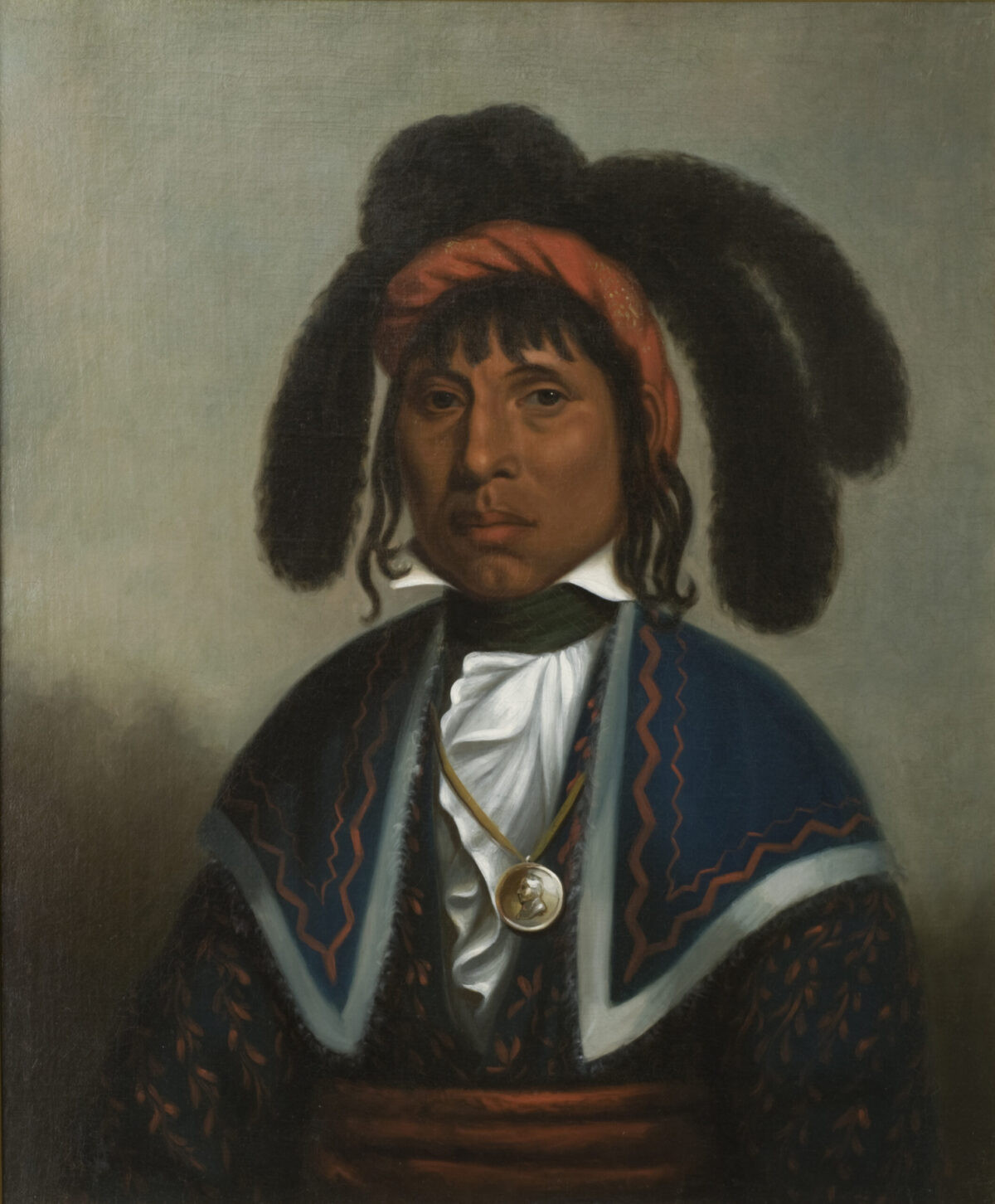
The subject of this week’s blog post is no different! Join us as we look at this 1832 portrait of Seminole leader Micanopy. Painted by Henry Inman, this treasure found its way back to the Seminoles of Florida and the Ah-Tah-Thi-Ki Museum twenty years ago this month. Follow along to learn who Micanopy was, how the portrait came to be, and how it finally made its way home in August 2006. You can see Henry Inman’s portrait of Micanopy as our featured image.
Micanopy
Micanopy was one of the most influential Seminole leaders of his time. The nephew of Ahaya (Cowkeeper), he was likely born in the St. Augustine area around 1780. You may recall that Ahaya was one of the best, and most remembered, cattle keepers of his time. An Oconee leader, Ahaya took control of Alachua near Gainesville in the early 1700s.
We know the area as Payne’s Prairie, which is named after Ahaya’s successor. Ahaya slowly gathered abandoned and feral Spanish cattle to grow his herd and ultimately build a thriving cattle industry. He would go on to amass an extremely large herd of cattle, and found Cuscowilla (now, Micanopy). By the time Micanopy was born, Ahaya and these Seminoles were working 7,000-10,000 head of cattle. Cuscowilla was the largest Seminole village in the mid-1700s. But, conflict and rising tensions would soon dominate Seminole life.
Micanopy gained leadership of Cuscowilla in 1819 at just around 40 years old. Ahaya had passed leadership to King Payne, who then passed it to his younger brother Bolek (Bowlegs). Micanopy took control following Bolek’s death amongst a great amount of uncertainty. These Seminoles were fresh off the Patriot War (1812-1814) and the First Seminole War (1817-1818). Both erupted after border skirmishes with the United States.
Andrew Jackson would lead U.S. forces into Spanish Florida to retaliate against the Seminole during the First Seminole War. Those in Alachua would feel the brunt of this campaign. Jackson raided Seminole villages along Lake Miccosukee and the Suwannee River. In 1819 the United States signed the Adams-Onis Treaty. In this treaty Spain ceded East and West Florida to the United States.
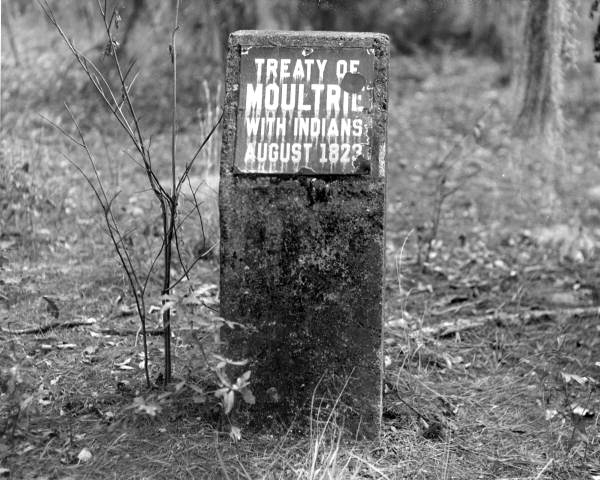
Historical marker for the signing of the Treaty of Moultrie Creek – St. Johns County, Florida, Florida Memory Project
Treaty of Moultrie Creek
Following the Adam-Onis Treaty Andrew Jackson was named territorial governor of Florida in 1821. What followed was an influx of American settlers into Florida. Large numbers of settlers colonized north Florida over the next decade. Micanopy was deeply opposed to the increased settler presence, and skirmishes were frequent. He would be the fourth of thirty-two leaders to sign the Treaty of Moultrie Creek in 1823. The treaty established a reservation in the center of Florida. It allowed Seminoles to stay in Florida but required ceding any other lands to the United States.
Seminoles were desperate to end the conflict at this point and didn’t want to leave Florida, their homeland. The treaty also established that they would receive support from the United States via resources and labor. Lines were drawn, effectively cutting the Seminoles off from any external allies, and they agreed not to shelter anyone escaping enslavement (STOF-THPO Seminole Stories, April 2025). The treaty would never be fully realized, and these Seminoles would be betrayed less than a decade later with Indian Removal.
The Treaty of Payne’s Landing and A Hope for Peace
In 1832, Micanopy would be present for the signing of the Treaty of Payne’s Landing, although he would be firm that “he did not touch his pen to the treaty despite white claims that he had participated.” It called for “the removal of the Seminoles to the Indian Territories west of the Mississippi (Weeks 2006).” Micanopy would become even more important during the Second Seminole War, as he tried to grasp peace and safety for his people.
He would reach a point where he no longer saw a way to win peace in Florida, and “although Micanopy was present at the Dade Massacre and several other conflicts, he realized that problems with slave hunters, trespass of reservations, repeated destruction of their camps, loss of their possessions and slow starvation were taking a serious toll on his followers.” Micanopy would prepare for relocation, although he was stopped by Osceola and Abiaka.
Micanopy was captured by General Jesup in 1838 under a white flag, when he was attempting to negotiate for his people. He was transferred to Indian Country in Oklahoma via boat. There, he “continued to be a powerful peacetime leader and was instrumental in helping his people survive the first few harsh winters in the new land. He negotiated settlement lands and worked as a liaison with the government on behalf of his displaced Seminole people in an effort tohelp them adapt to their new environment.” Micanopy would die in 1849.
Henry Inman’s Copy of the Micanopy Portrait
In 1826 with hopes for peace, Micanopy would be part of a delegation of Native American leaders to Washington D.C to meet President Adams. Then-Commissioner of Indian Affairs Thomas L. McKenney had “invited all the prominent Indian dignitaries within the continental U.S. and its territories to visit the president in Washington and negotiate terms on behalf of their people.”
Indian Agent Gad Humphreys would organize a group of eight leaders from Florida to make the trip. During the trip, McKenny became convinced that these Native Americans “were becoming a vanishing race.” He then commissioned painter Charles Bird King to paint as many portraits of tribal leaders as possible. King would complete 143 portraits, including one of Micanopy. Both McKenny and Humphreys would be later removed from their roles due to their “pro-Indian attitude.”
The portrait that we see now, held by the Ah-Tah-Thi-Ki Museum, is a copy of King’s original portrait. Following his removal, McKenny would move from Washington D.C. to Philadelphia. The former Indian commissioner would commission painter Henry Inman to create copies of King’s original portraits in 1831. This would prove to be a smart move. Due to a fire at the Smithsonian in 1865 almost all of King’s originals were destroyed, including that of Micanopy. Inman’s copy is all that is left.
Micanopy Comes Home
The Seminole Tribe of Florida started the process to bring Micanopy home in the 1990s. They were approached by a private collector who was looking to sell Inman’s portrait. With a number of false starts and negotiations, as well as multiple years of paperwork, the portrait would finally find its way home in 2006.
Then-Executive Director of the Museum Tina Osceola shared her feelings on the return during the Ah-Tah-Thi-Ki Museum celebration of the painting in August 2006. “Finally the day came for us to bring Micanopy home. What an incredible feeling of responsibility as we moved this priceless artwork from the Santa Fe Gallery to the airport. Not wishing to take our chances with public transportation, we caught a ride on the tribal jet. We all breathed a sigh of relief when he had been safely deposited in our vault.”
With a gesture toward the portrait, Osceola said, “There are no words to describe my feelings when I first laid eyes on Micanopy in the gallery in Santa Fe. His image is so lifelike and his eyes look directly back at you. As you stare into his eyes you feel as though you can read the expression on his face as he was being painted. His features emit strength and resolve. I can only imagine how he must have felt in a strange place, far from home, in the midst of his aggressors; not knowing whether he would ever be permitted to return to his family and followers.”
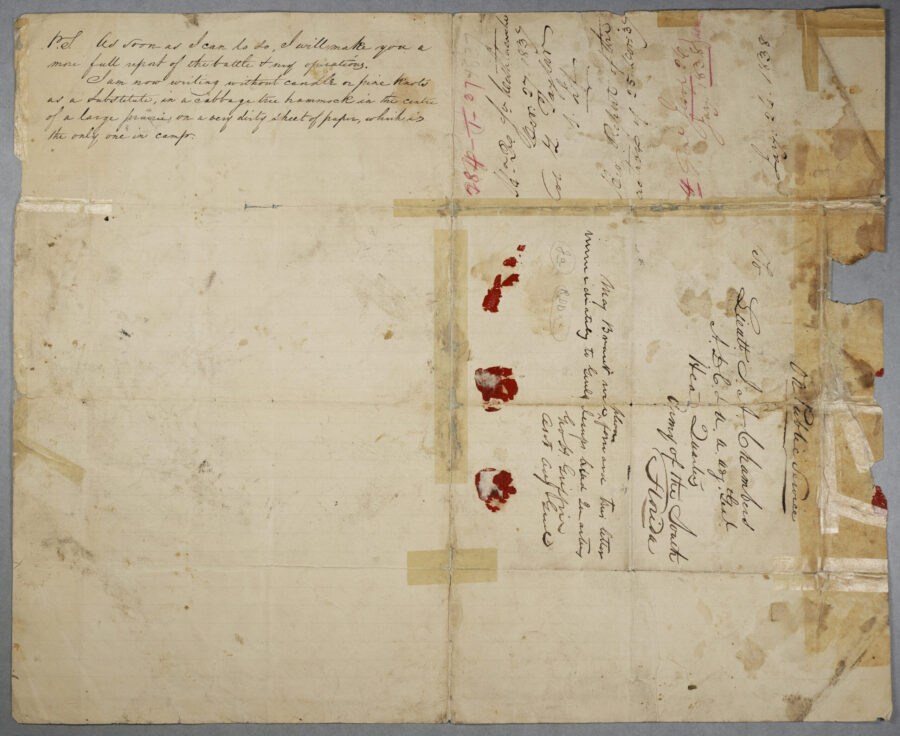
In addition to the painting, the Ah-Tah-Thi-Ki Museum had a handful of associated artifacts to authenticate it. This included a hand-written letter and engraving of Henry Inman, an 1825 John Quincy Adams Peace Medal, and a journal from Gad Humphreys detailing expenditures during the trip. The journal “substantiates the Seminole Delegation of eight individuals with Micanopy specifically listed. Dated June 30, 1826, it is a statement of expenditures submitted by Gad Humphreys for the return of the Delegation from Washington to Florida. Among the items listed are food, travel passage and interestingly enough, a medical fee for Micanopy who had become ill during the trip,” concluded Osceola.
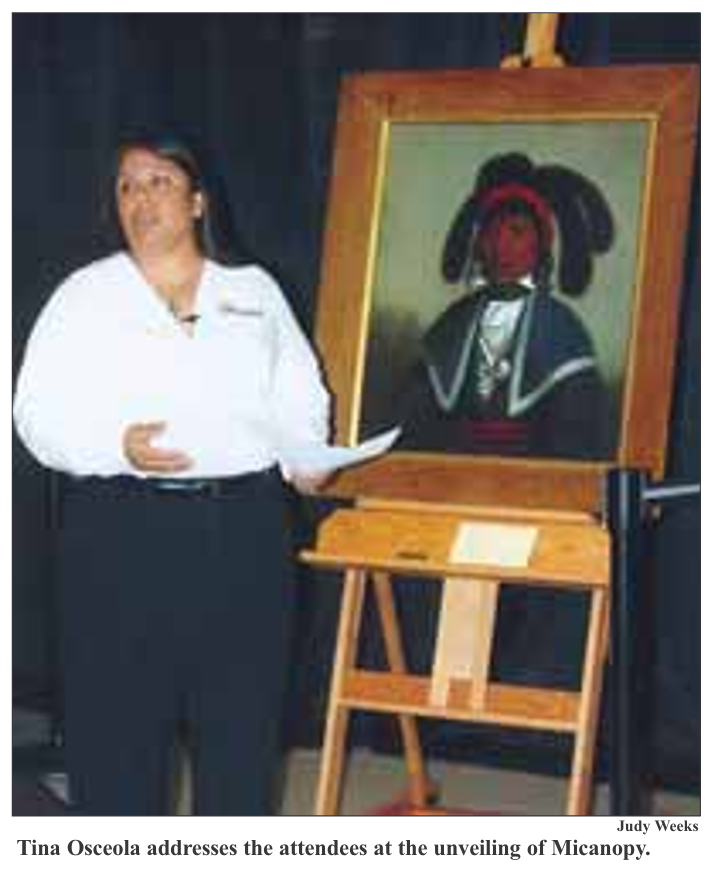
Tina Marie Osceola speaking at the Ah-Tah-Thi-Ki Museum’s unveiling of Micanopy’s portrait, August 2006. Judy Weeks for the Seminole Tribune.
Twenty Years Back Home
The Micanopy portrait was created during a time of great uncertainty and tension, at the precipice of a war even greater than those that had come before. The Seminoles of Florida would endure decades more suffering facing removal, starvation, the fracturing of entire communities, and death. But, they would endure.
This month marks twenty years since Inman’s portrait of Micanopy found its way back to the Seminole Tribe of Florida. It has been 188 years since Micanopy himself was removed from Florida, and 194 since Inman painted a copy of King’s original, which would be 200 years old had it survived. Inman’s portrait, which is unrestored but in excellent condition, is not only a part of Seminole history but also a testament to the dedication of Seminole people to survive, thrive, and come home.
Additional Resources
Weeks, Judy. “Seminole Leader Micanopy Comes to Ah-Tah-Thi-Ki,” Seminole Tribune. September 1, 2006.