
Eight Amazing Past Exhibits at the Ah-Tah-Thi-Ki Museum
Wow! This August 21st, 2026, marks 29 years since the grand opening of the Ah-Tah-Thi-Ki Museum. Over the past twenty-nine years the Museum has seen hundreds of thousands of visitors, hosted an incredible amount of unique and engaging exhibits, and supported the Seminole community both on and off reservation. As we look back on everything they have achieved, it is clear to see the pride, dedication, and commitment they have to sharing the Seminole story. Today, we are going to celebrate by highlighting eight amazing past exhibits that even years later are making an impact. This is not an exhaustive list – there have been so many more fantastic installations over the years. But we hope that this small peek into the past few decades will shine a light on how incredible the Museum is.
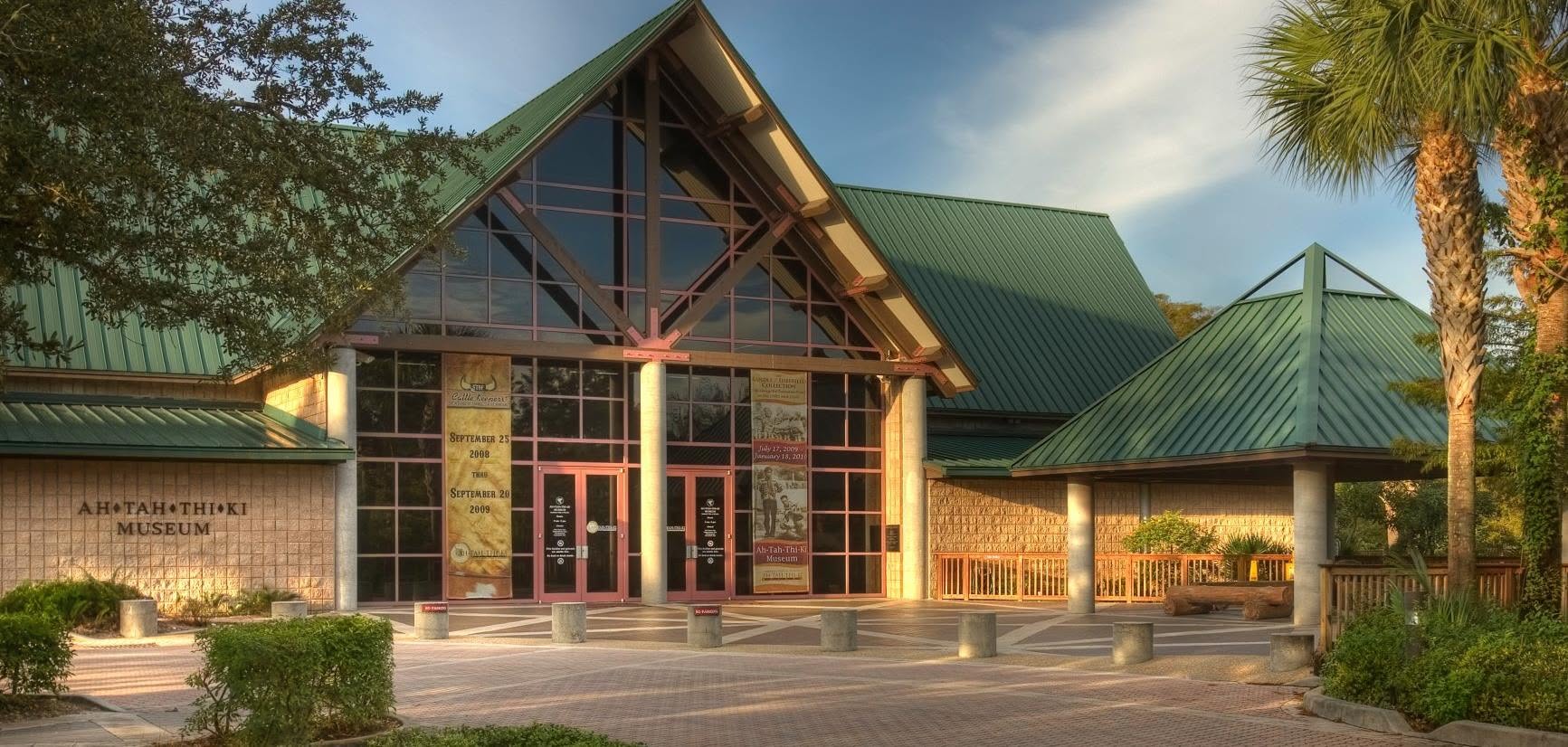
We also encourage you to go out to the Big Cypress Reservation and experience the Ah-Tah-Thi-Ki Museum for yourself. This list of past exhibits barely scratches the surface of the past twenty-nine years, and there is so much more to come! In our featured image, you can see the Ah-Tah-Thi-Ki Museum in 2009.
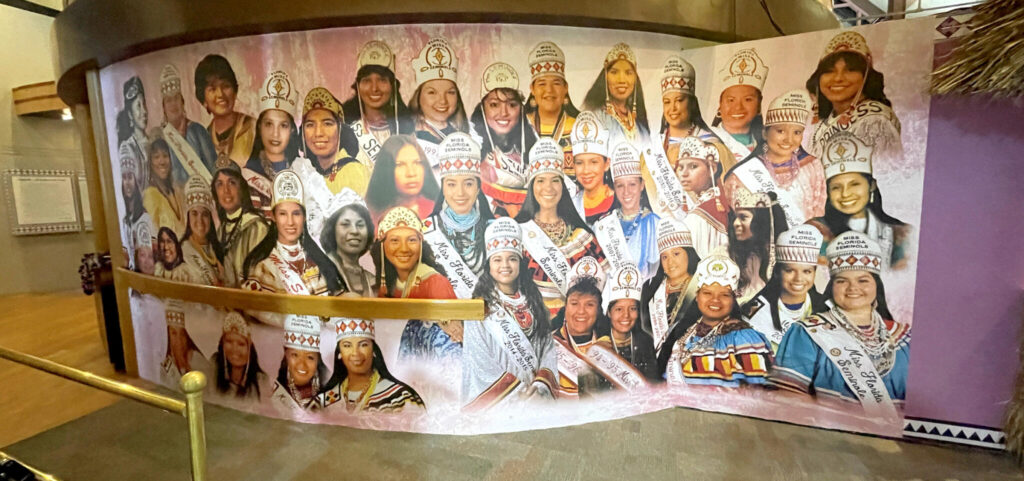
A large montage featuring Miss Florida Seminole pageant winners greets visitors as they enter the ‘Beautiful and Proud’ exhibit (Kevin Johnson for the Seminole Tribune)
Beautiful and Proud, 2025
A more recent installation, Beautiful and Proud showcases the women who were, and are, Miss Florida Seminole. The Miss Florida Seminole pageant has been run since 1960, with Connie Frank Gowen and Mary Motlow Sanchez being appointed by Chairman Bill Osceola in 1957 and 1958 respectively. The contest is an opportunity for young women to showcase their knowledge Seminole culture, tradition and history. Miss Florida Seminole and Jr. Miss Florida Seminole then spend the following year representing the Seminole Tribe of Florida. The exhibition featured personal stories, crowns, regalia, memories, and more. A beautiful tribute to some of the most impactful Seminole women in modern history, the exhibition showed the unique and lasting impact of the Miss Florida Seminole contest.
JoJo Osceola, Miss Florida Seminole 2004 and Assistant Director of the Ah-Tah-Thi-Ki Museum, welcomed the crowd at the opening celebration in 2025. “These special women have gone on to become tribal leaders, community leaders, businesswomen, aunts, mother and grandmothers,” Osceola said. “To our future generations of aspiring Miss Seminoles to come, be proud and remember where we come from. Our intention with this exhibit is to honor our Seminole women and to inspire our young people to be part of something bigger than yourself.”
Ahfachkee and Pemayetv Emahakv Student Art, On-Going
Although it is cheating (just a little!) this exhibit isn’t one single installation, but rather a commitment to showcasing Seminole student art throughout the Museum, and especially on the Mosaic wall. Over the years there have been a number of installations of student art from classes at the Ahfachkee School on Big Cypress and Pemayetv Emahakv Charter School on Brighton. With varying themes, ages, and mediums, each exhibit highlighted the incredible talent of these young artists. Each student worked hard, stretching their creative talents and earning a spot in the Museum’s exhibit space. Past exhibit themes have ranged from student interpretations of famous art works to pieces that embody their experiences during the COVID pandemic. We encourage you to visit this fall to experience the latest student art installation!
Seeing Red: A Community’s Response to the Crisis of Missing and Murdered Indigenous People, 2023
Indigenous women and children are disproportionately affected by violence and assault. In 2023, the Ah-Tah-Thi-Ki Museum would launch their first exhibit bringing awareness to the Missing and Murdered Indigenous Persons (MMIP) movement. The exhibit was conceptualized by Lorelei Tommie, who also co-curated the exhibit with Museum staff. She had originally intended to create one piece of 3D art to represent the issue. “Then I realized it needed to be more than one piece or one voice because it affects all of us,” Tommie said in a Seminole Tribune article “I did a social media blast and asked for people to submit artwork. The idea blossomed from there.”
The exhibit featured community artwork, personal stories, resources, information on where to donate money, and provided toolkits for communities and families to use in case of a missing person. Since then, there have been more MMIP events and additions to the exhibit annually.
Part of Lorelei’s inspiration came from the case of Owachige Osceola. The Seminole Tribe of Florida Tribal member was found murdered in her apartment in Norman, Oklahoma in 2013. She grew up on the Big Cypress Seminole Indian Reservation and was also an alum of the Ahfachkee School. If you have any information about Osceola’s case, you can contact the Seminole Police Department.
Below, you can see an iconic piece of artwork created by Lorelei Tommie for the 2023 “Seeing Red” Exhibit with the Ah-Tah-Th-Ki Museum. It continues to be a symbol for the Seminole Tribe of Florida’s community response to this issue.
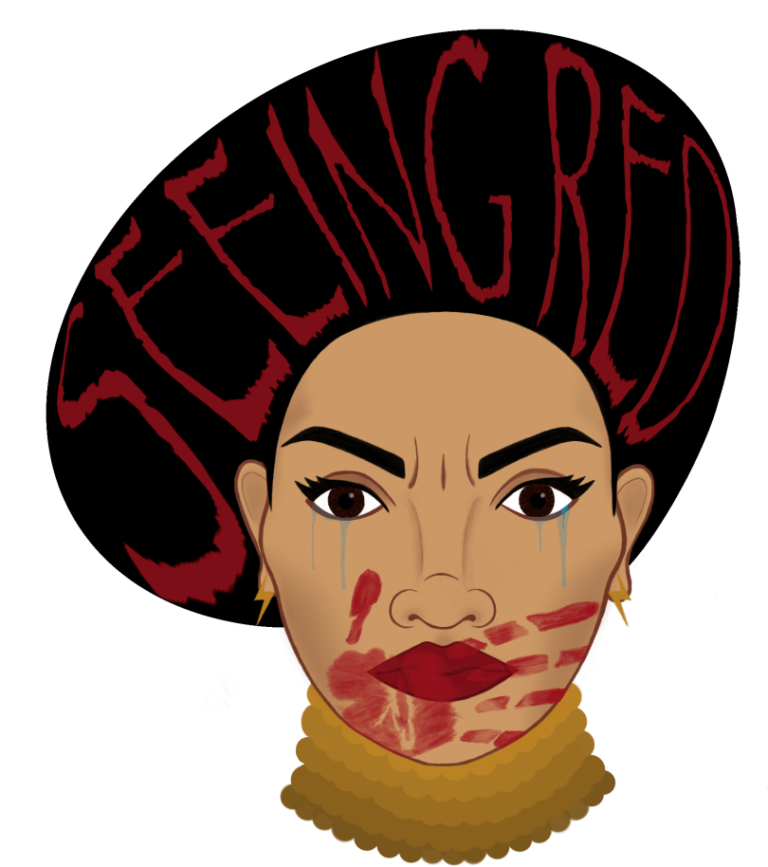
Via the Ah-Tah-Thi-Ki Museum
Creating Tradition: Innovation and Change in American Indian Art, 2018, Ongoing
One of the Museum’s off-reservation installations, Creating Tradition represents the first time American Indian heritage, culture, and art has been installed at Epcot. Disney developed the exhibition in partnership with the Museum of Indian Arts and Culture (MIAC) in Santa Fe, New Mexico and the Smithsonian’s National Museum of the American Indian. It is located in the American Heritage Gallery at Epcot. Indigenous art from throughout North America is represented by region. This includes the Eastern Woodlands, Southeast, Plains, Great Basin & Plateau, Southwest, California and Hawaii, and Northwest Coast and Arctic. Seminole art can be found in the “Southeast” section.
The Ah-Tah-Thi-Ki Museum has been involved in the exhibition since its development and opening in 2018. In that time, a number of objects have been installed in this exhibit case. The Museum routinely rotates items to protect the objects, refresh the exhibit, and to show more of the Seminole story through material culture. In fact, the entire exhibit is constantly changing; since the initial installation many, many objects have been rotated and switched out. Throughout the years this has included Seminole patchwork, beaded sashes and bandolier bags, stickball sticks, and many other objects. Below, you can see a snapshot of some of the current objects installed at the moment, updated April 2026!
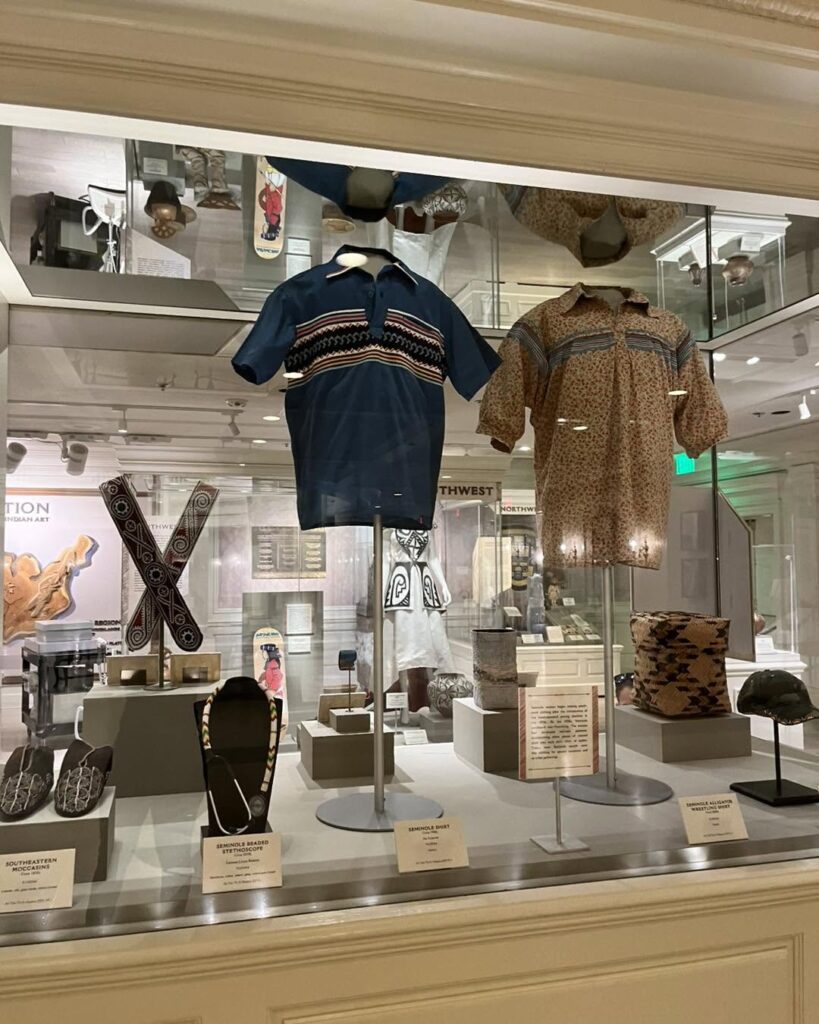
Via the Ah-Tah-Thi-Ki Museum Facebook
Skin Deep: Contrasts in Seminole Culture, 2019
In 2019, the Museum stretched out of their own comfort zone and featured one of the most contemporary exhibits they had done to date. Eight Seminole women, including then- Ah-Tah-Thi-Ki Museum multimedia coordinator Lorelei Tommie, were photographed for the exhibit in a style reminiscent of old Hollywood. The images focused on their tattoos, highlighting them as pieces of art. The exhibit was a collaboration by artist Lorelei and photographer Drew Osceola.
Tommie selected Osceola to bring her vision to life due to his experience as a classically trained photographer, with a focus on portrait photography. “I wanted to show that tattoos could be elegant and sophisticated,” Lorelei said in a 2019 Seminole Tribune article. Osceola focused on showcasing the women as whole beings and not just highlighting their tattoos. He achieved this by “using hand lighting to create shadows and sculpting his subjects to create a dramatic effect that he calls a ‘canvas within a canvas.’”
Former Director Kate Macuen recalls it fondly, saying “One of my favorite exhibits the museum did was a photography exhibit on tattoos– Skin Deep. This was a collaboration by tattoo artist Lorelei and photographer Drew Osceola. It was the first time in my memory that the Museum had exhibited works with such a contemporary topic. It was a beautiful exhibit.”
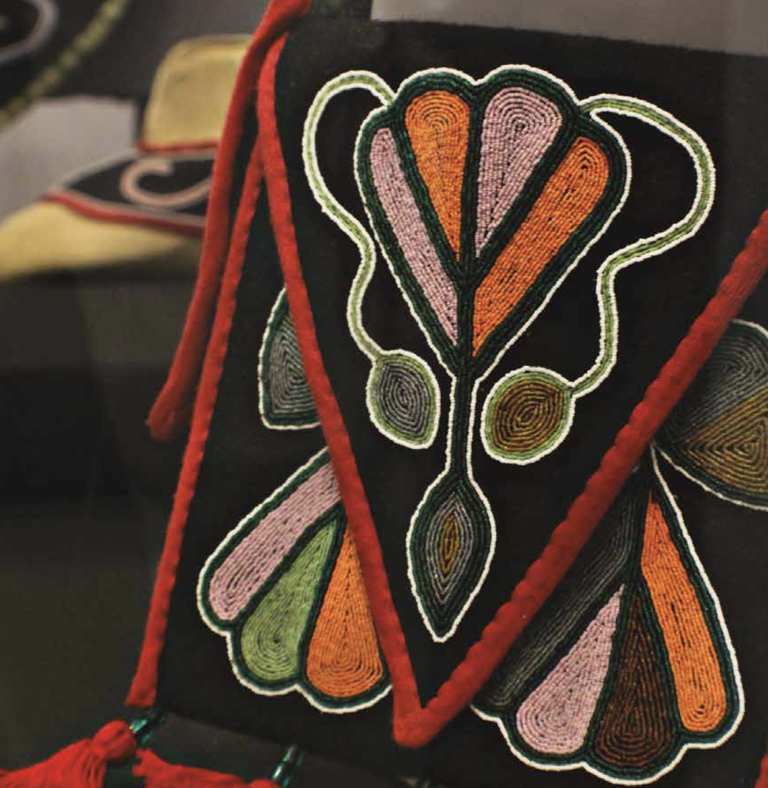
Via the Winter 2018 Ah-Tah-Thi-Ki Museum AQ, 2017 Annual Report.
Rekindled: Contemporary Southeastern Beadwork, 2017
Opened in the west gallery in January 2017, Rekindled focused on contemporary beadwork, reviving traditional styles created in the 1800s. In the late 1990s and early 2000s a number of southeastern artists worked to revive these beading traditions. Some of these artists included Roger Ellis Amerman (Choctaw), Martha Berry (Cherokee), Carol Cypress (Seminole Tribe), Jerry Ingram (Choctaw), Jay McGirt (Seminole/Muscogee), and Brian Zepeda (Seminole Tribe), and later Karen Berry (Cherokee). The exhibit featured beaded objects that were thought to be a lost tradition for southeastern tribes including Seminoles. Items such as bandolier bags and sashes were beautifully displayed throughout the exhibit space.
Part of the uniqueness of the exhibit was how it highlighted the process of rekindling these traditions. Both Carol Cypress and Brian Zepeda shared during the exhibit that as they talked to elders and researched these traditions, they learned more about the intention behind beaded items like bandolier bags. Men would wear bandolier bags made of wool and trade beads, with intricate designs. Carol shared that “During the war time, they said that if a man was wearing [a bandolier bag] and they came by you see how he looks in front, but if you turn around and look back it looks different from the back, so that was supposed to disguise that there were more people fighting.”
You can learn more about Carol Cypress’ experience reviving this tradition, and how she took inspiration from 1,000-year-old native pottery, in a previous Museum blog post.
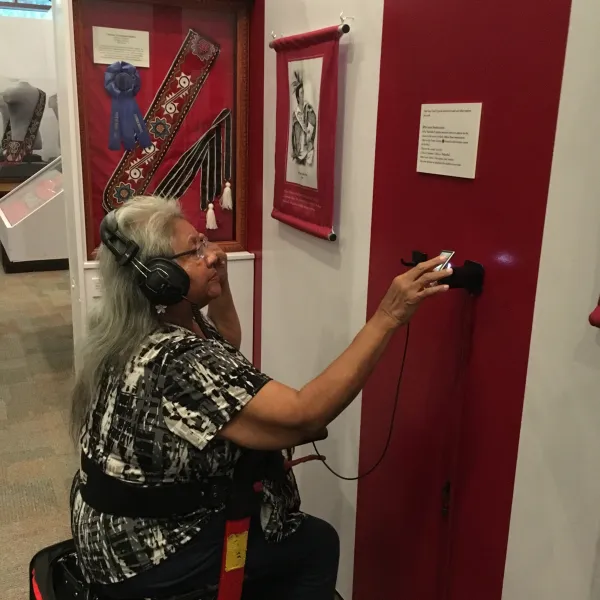
Carol Cypress, reviewing her own ‘Rekindled’ oral history, via the Museum blog
Brian Zepeda learned that particular designs could be identifying. He shared that “One of those things that was passed on to me was the usage of them during wars because the bandolier bags have designs on them that were sometimes specific to a clan or a family so when you were out on a battlefield or in a battle you could look around and see if you were in the right place at the right time.”
Stories like these were at the core of the exhibit, which not only highlighted some incredible art but also tried to spark a conversation about the loss, and revival, of important native traditions.

Ramp It Up!, 2014
The Ah-Tah-Thi-Ki Museum opened Ramp It Up: Skateboard Culture in Native America in fall of 2014, on loan from the Smithsonian Institution Traveling Exhibition Service (SITES). Skateboarding is one of the most popular sports on Indian Reservations, and the Museum wanted to highlight now this important cultural touchstone affected tribal youth. The Museum noted on their blog in 2014 that “skateboarding has inspired American Indian and Native Hawaiian communities to host skateboard competitions and build skate parks to encourage their youth. Native entrepreneurs own skateboard companies and sponsor community- based skate teams. Native artists and filmmakers, inspired by their skating experiences, credit the sport with teaching them a successful work ethic.” The exhibit celebrated “the vibrancy, creativity and controversy of Native skate culture.”
At the exhibit opening tribal youth were able to design their own skate decks (above). Carrie Dilley, former Visitor Services & Development Manager recalls the fun exhibit. She shared that “as part of the Museum’s Ramp It Up exhibit, we hosted a skate parade through Big Cypress It was so fun to see the youth leading the parade to kick off AIAC that year. A few of us staff members even joined in… on our rollerblades!”
Struggle for Survival: 1817-1858, 2015
The Museum has been open now for almost three decades, and it remains at the top of the priority list to center Seminole experiences and the Seminole voice. This includes highlighting the Seminole experience of their own history. Struggle for Survival: 1817-1858 first opened in December 2015 and provided a snapshot of Seminoles’ courage and resilience during the Seminole War period.
In particular, a common thread throughout the exhibit was to highlight Seminole voices and acts of resistance in the face of insurmountable odds and violence. The exhibit featured oral histories and traditions passed down from the war-time period set against a historic framework. It also explored the tools and tactics the Seminoles employed to survive in the Everglades. Approximately 4,000 Seminole were removed from Florida to Oklahoma. They would later become the Seminole Nation of Oklahoma.
Those who escaped and remained in Florida “survived through a superior understanding of their land, guerilla war tactics, and a deep, abiding understanding of what happen to them if they did give up.” But it did not come without an incredible cost. The exhibit underscores that “it was a struggle to survive – it took all their ingenuity. Ultimately the ravages of war that lasted over 40 years caused many to accept removal. However, the spirit of resistance and adaptability survived in all. Today, the Seminoles continue to show the resiliency of their ancestors.”
The exhibit featured a fabricated, recreated swamp complete with foliage and cypress knees. Recorded swamp sounds, such as chirping crickets and rustling leaves, provided a sensory experience. The Museum team also recreated the entrance to the Grey Cloud (below), the steamer that transported Seminole captives north to Oklahoma. The effect was intended to be immersive, to make you feel how Seminoles would have felt to further drive that experience. You can learn more about their fabrication on an old Museum blog post!
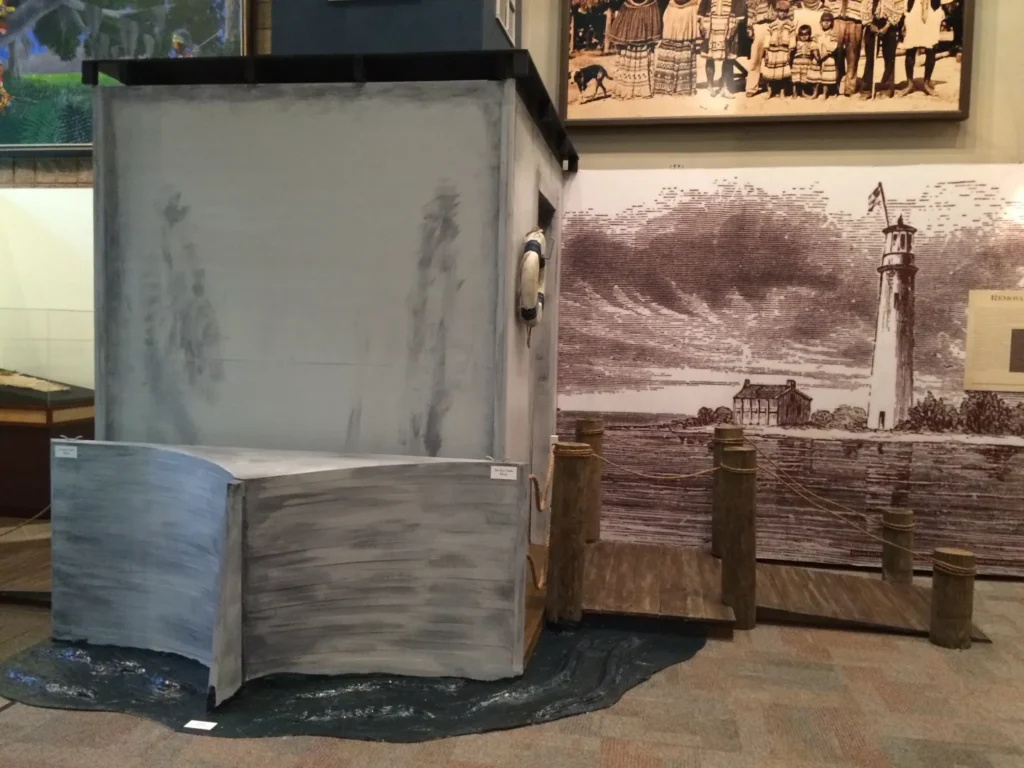
Recreation of the Grey Cloud, via the Ah-Tah-Thi-Ki Museum
Museum Redesign
Did you know that the Ah-Tah-Thi-Ki Museum is changing? In November after AIAC, the Museum will be closing to the public to launch their Museum Redesign project. The “Telling Our Stories” Museum Redesign campaign launched in 2017, since then they have been slowly, thoughtfully, and meaningfully pushing forward with plans to redesign the Museum space to better share the Seminole Story. Finally, this December, the Redesign is moving out of the “planning” and into the “action” phase! We encourage you to support the Museum throughout the closure, and keep your eyes open for fun events, activities, and experiences you can be a part of.