Spotlight on the Florida Memory Project
We all know that the Ah-Tah-Thi-Ki Museum is the best place to learn more about the Seminole story. But, there’s another impressive online resource that is full of Seminole history–right at your fingertips. The Florida Memory Project is run by the State Archives of Florida and is an incredible repository of open-source content with a focus on Florida history.
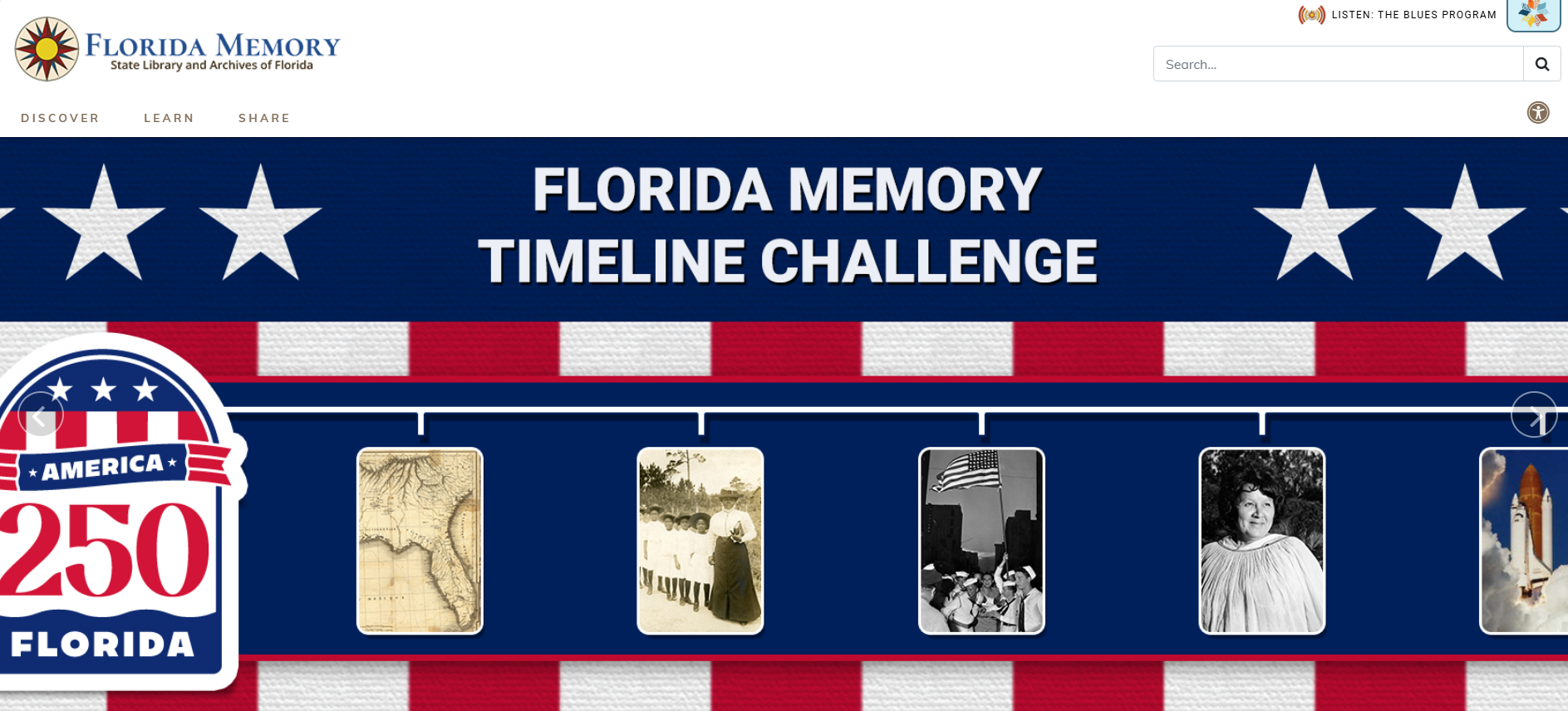
Many of these items relate to Seminole history, making the Florida Memory Project a major source of content for anyone looking to learn. Today, join us as we navigate this incredible resource and take a peek at a handful of the Seminole-related items. In our featured image you can see the homepage of the Florida Memory Project, which currently features their “Florida Memory Timeline Challenge.” Developed to test people’s knowledge on Florida history in honor of America’s 250th anniversary, the challenge contains a handful of tiles related to Seminole history. You can see Betty Mae Jumper featured prominently in the image!
What is the Florida Memory Project?
Funded by the Library Services and Technology Act, the Florida Memory Project is an online hosting of part of the State Archives of Florida. The State Archives of Florida is “mandated by law to collect, preserve, and make available for research the records of the State of Florida, as well as private manuscripts, local government records, photographs, and other materials that complement official state records.” The Archives are part of the Division of Library and Information Services (DLIS), which is then part of the Florida Department of State. In 1994, the State Library and Archives of Florida sought to make its collections accessible to the “largest possible audience” through a grant under the Library Services and Technology Act. Thus, the Florida Memory Project was born.
What is their mission?
The mission of the Florida Memory Project is “to provide free online access to select archival resources from the collections of the State Library and Archives of Florida.” They, in particular, choose “materials for digitization that illuminate significant events and individuals in the state’s history, and help educate Floridians and millions of other people around the world about Florida history and culture.” We have mentioned before on the blog that Seminole history is Florida history. It is no surprise, then, that Seminoles make up an important and integral part of these archives.
Discover
The Florida Memory Project is comprised of three main components. The first of these is “Discover.” Under this section you have more than 200,000 digitized photographs, over 300,000 historic records, hundreds of maps, and thousands of audio and visual recordings. You can engage with this part of the Florida Memory Project by utilizing the tabs in the upper left corner of the homepage (shown in our featured image).
Under the “Discover” tab you’ll be able to explore photographic collections such as the Harriet Bedell Collection. This collection, which we have shared before on our blog, contains 129 prints of Deaconess Harriet Bedell working among Seminoles in South Florida from 1933 to 1960. You can also search for images by keyword – pulling up specific people or places. Historic records, such as letters, diaries, and documents, provide greater context for Florida history. Items like General Jesup’s diary during the Second Seminole War are available for you to read, with significant portions emphasized.
Learn
The second component is “Learn.” This section reflects the many ways that project members cultivate enrichment and learning through the various materials. It ranges from articles written by archive staff on significant topics, classroom learning units, primary sourcing sets, teaching aides, exhibits, and research tools. Examples of what you might find here are endless. There is a huge backlog of educational material, even including the newly launched Florida Memory Timeline Challenge. The timeline challenge, which is very cleverly built and designed, can be calibrated to different grade levels and subjects. Through a game, you match significant moments in history to their dates and can even pull up more information on each topic. You can see an example of a fresh stack of cards below. You might even see a couple of cards relevant to Seminole history in this stack!
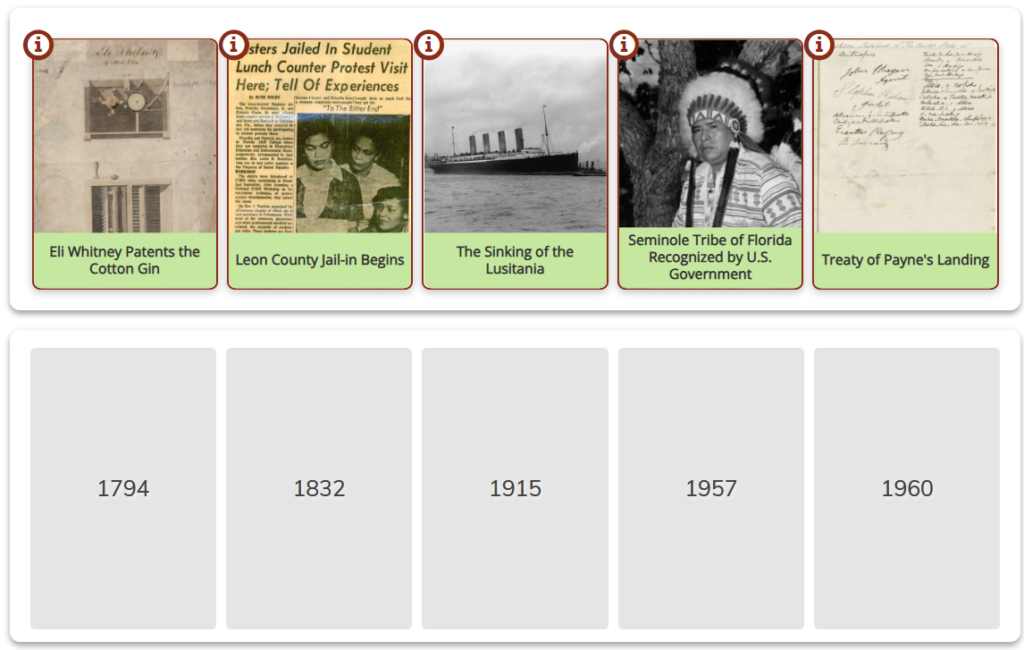
Florida Memory Project
Floridiana: Stories from Florida’s Remarkable Past is a series of articles written by archive staff. Many of these articles include pieces of Seminole history, such as this one about Seminoles at Musa Isle written in 2012. This ongoing series of articles uses “the extensive collections of the State Archives and State Library of Florida to illustrate the rich and varied history of our state. Photographs and illustrations, maps, film footage, sound recordings, letters, diaries and other sources combine to tell the story of the Sunshine State in a unique and engaging way.”
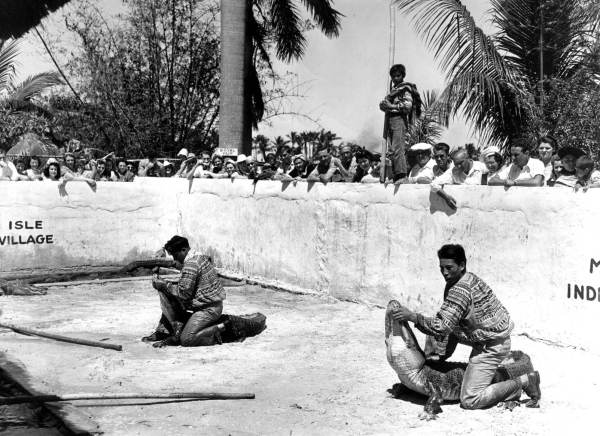
Alligator Wrestlers at Musa Isle, Miami, 1940s. State Archives of Florida.
In addition to all these incredible resources, the Florida Memory Project also hosts a number of exhibits and research tools to better guide you along your path to learning. Although several of the exhibits and photograph collections specifically orbit around Seminoles, you would not be shocked to find some familiar figures in other archive areas. For example, James Billie is a featured artist in the Florida Folklife Collection, which “document[s] the performances by, interviews with, and fieldwork surveys of folk musicians, artisans, storytellers, folklife interpreters, and other Florida peoples and their traditions.” His profile contains audio recordings of three of his songs (including his hit, “Big Alligator”) as well as a handful of interviews recorded at Florida Folklife Festivals from 1981-2001. Some images, such as the one below, are also included.
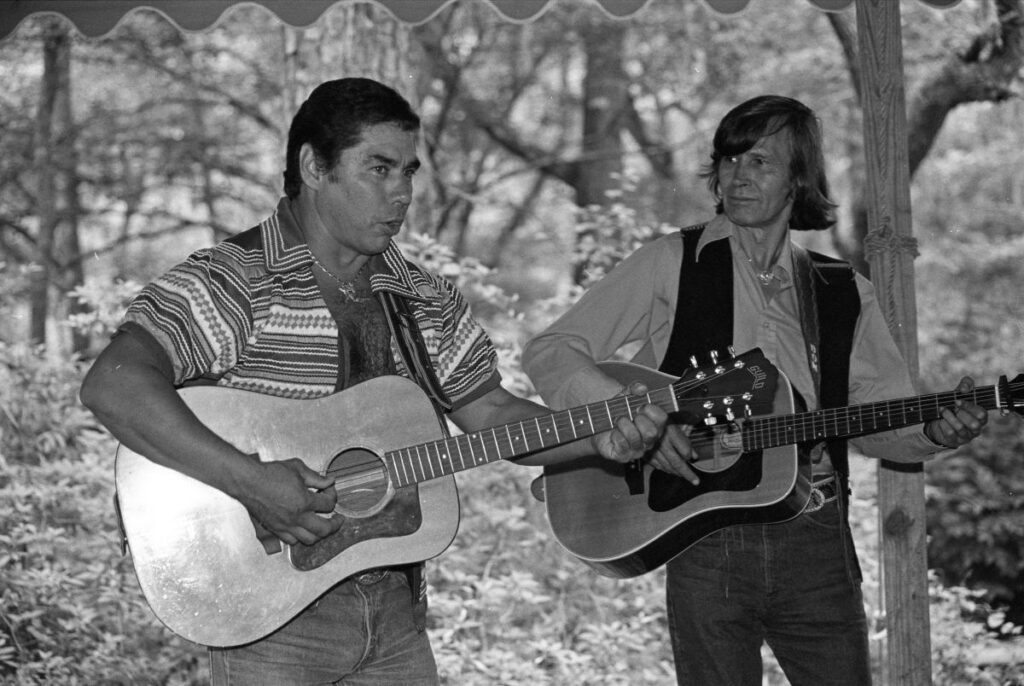
James Billie and Don Grooms performing at the 1983 Florida Folk Festival – White Springs, Florida. State Archives of Florida/Coltharp.
Seminoles are deeply intertwined with the history of Florida, and we encourage you to take the time to explore within the Florida Memory Project’s vast archive.
Share
Finally, the third component within the Florida Memory Project is “Share.” You can be a part of this project by ordering prints or scans of the images or maps, connecting with Florida Memory Project by signing up for their newsletter, following and sharing on social media, or donating records or papers from your own family to the State Archives of Florida.
Selections from the Archive
Wonder what you might find in the Florida Memory Project? Below, we will share just a few selections from the archive, with a focus on the Seminole story.
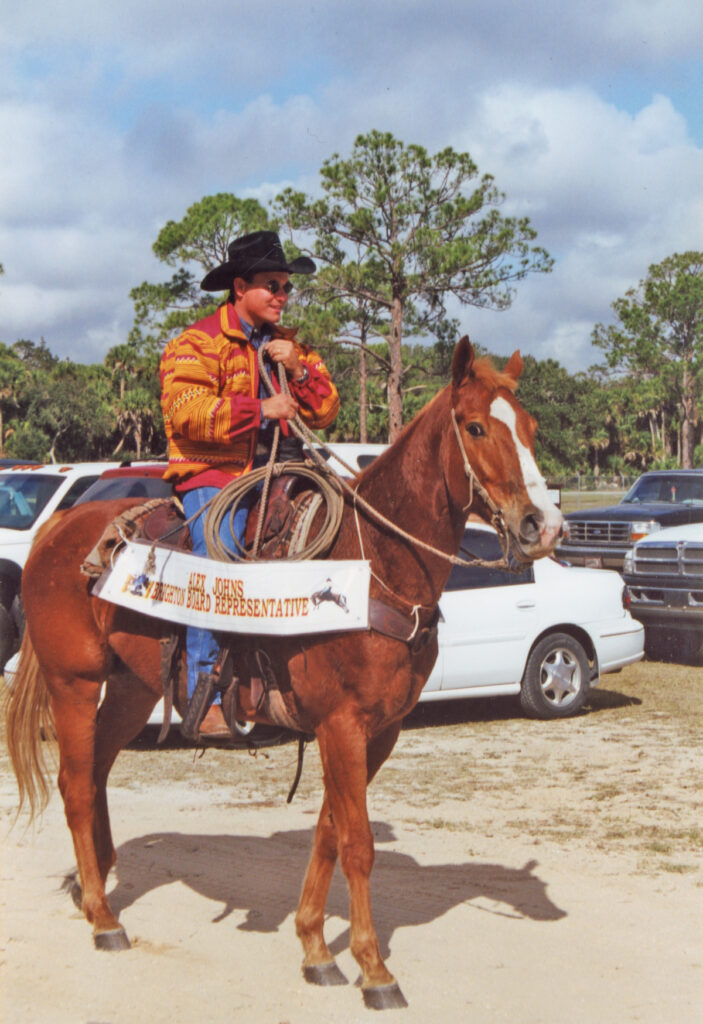
Alex Johns on horseback in the tribal festival at Brighton Seminole Reservation (most likely Brighton Field Day), circa 2000. State Archives of Florida/Lusth.
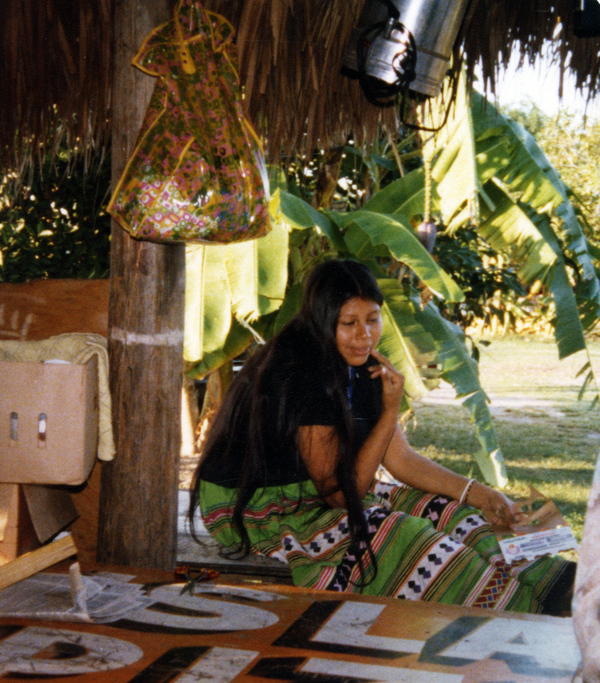
Alice Billie sits under a chickee, circa 1978. State Archives of Florida/Marks.
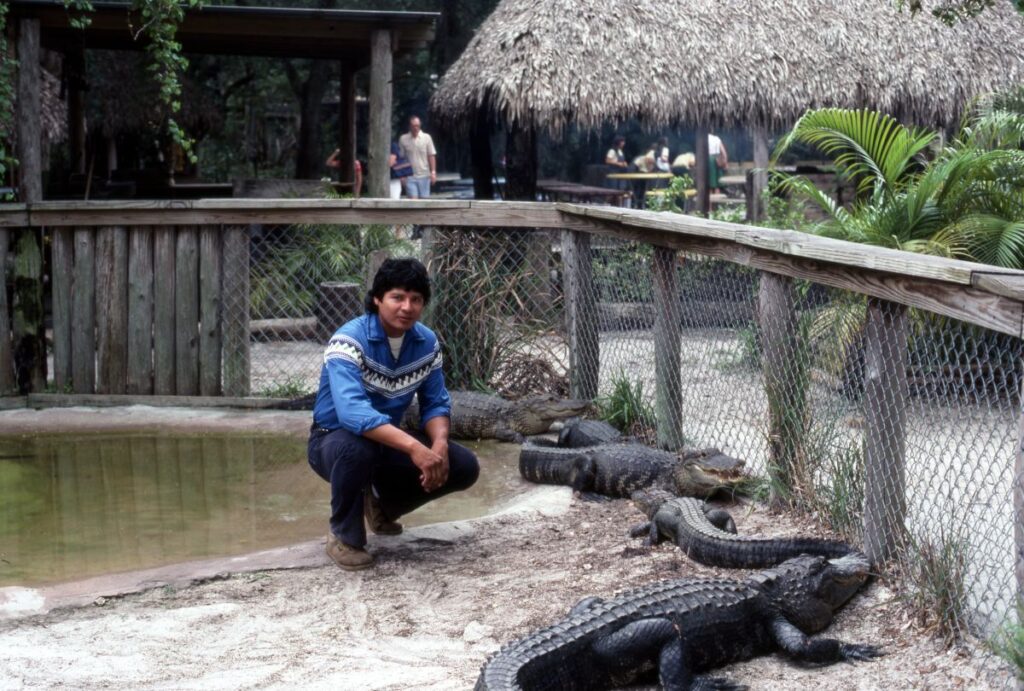
Richard Bowers, alligator wrestler, poses with alligators in Hollywood, FL, circa 1983. State Archives of Florida/Dyen.
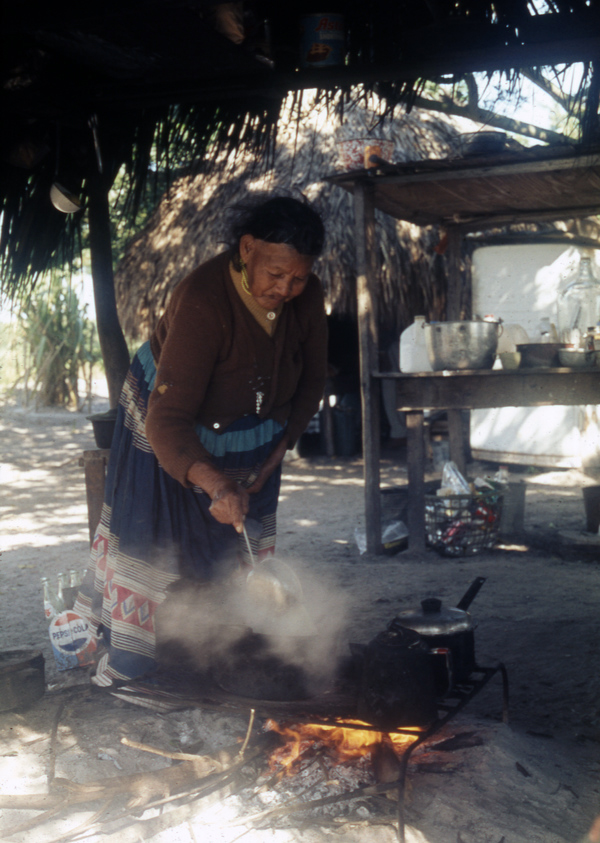
Annie Doctor Fewell cooking, March 1972. State Archives of Florida/Marks.
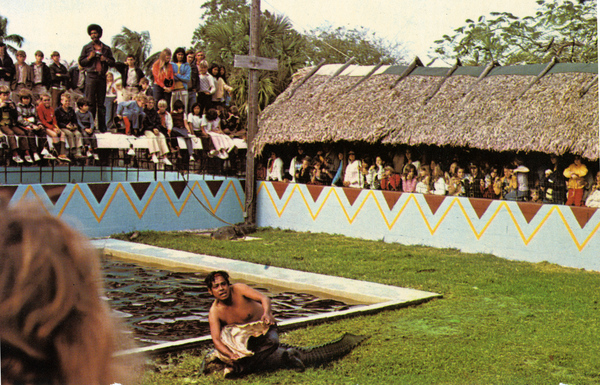
Alligator trick contest at Tribal Fair, 1973. State Archives of Florida/Capicotta.
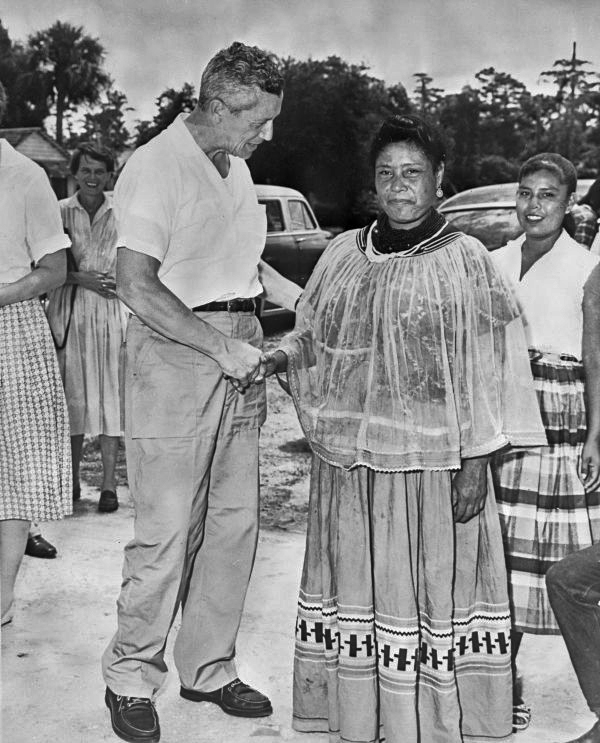
Annie Tigertail welcomes Governor Collins (1955-1961 term) to the Brighton Reservation. State Archives of Florida.
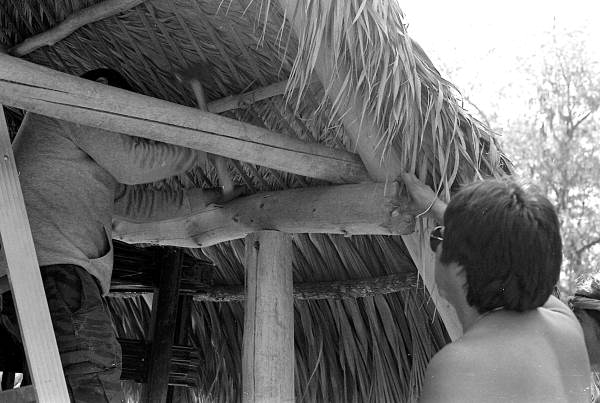
Attaching roof to Seminole chickee frame at the 1986 Florida Folk Festival – White Springs, Florida. State Archives of Florida.
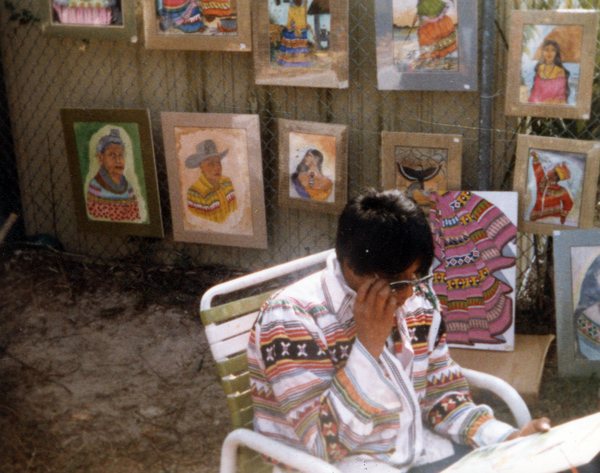
Artist Paul Billie with his paintings at the Seminole Festival in Naples, 1983. State Archives of Florida/Marks.
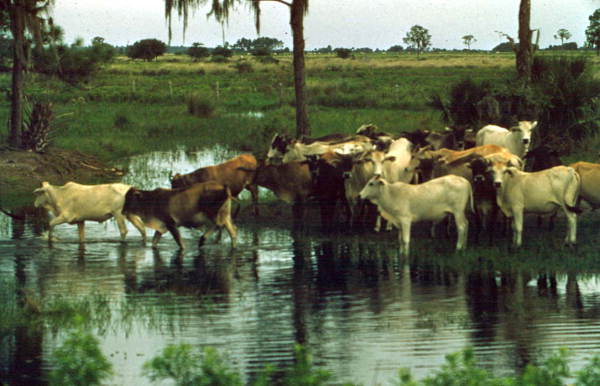
Cattle crossing water on the Brighton Reservation. State Archives of Florida/Peithmann.
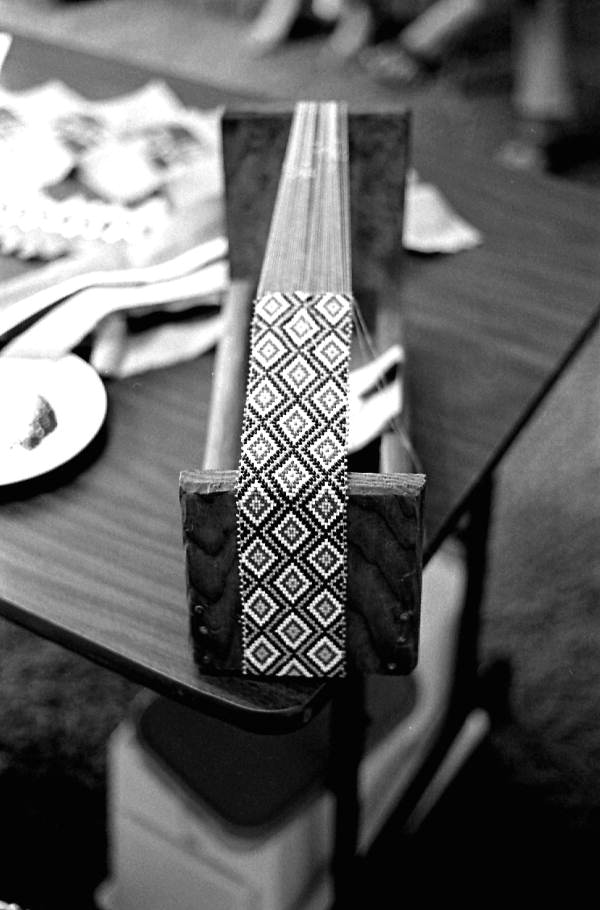
Beadwork for a Seminole sash made by Lottie Shore- White Springs, Florida, 1984. State Archives of Florida/Nusz.
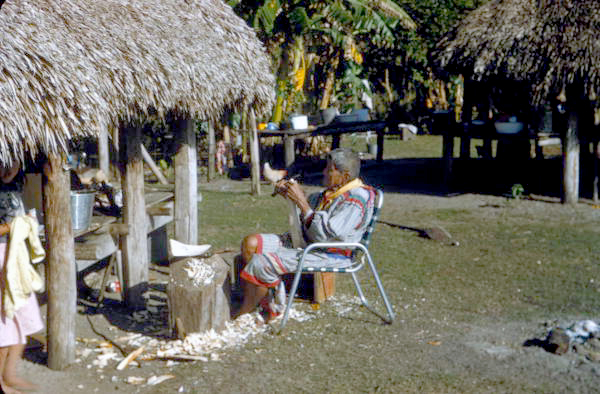
Charlie Cypress whittling wood – Big Cypress Seminole Indian Reservation, Florida. State Archives of Florida/Peithmann.
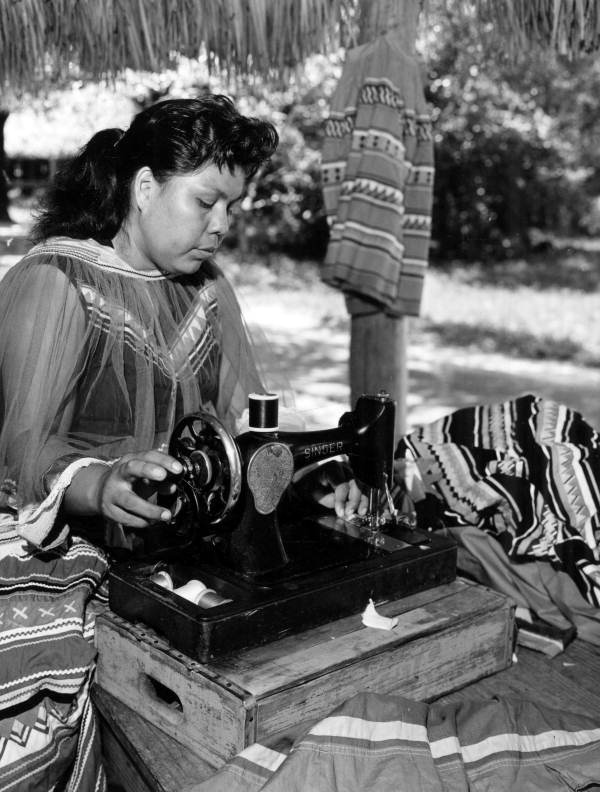
Betty Osceola sewing at the Seminole Okalee Indian Village on the Dania Indian Reservation, 1961. State Archives of Florida/Barron.
The Florida Memory Project is an incredible tool and resource for anyone trying to better understand Florida, and Seminole, history. Much like any resource, we encourage you to explore and learn while trying to center the Seminole voice.